
Exploring Norway’s Rich History and Culture as a Student
Norway’s Historical Journey: From Viking Roots to Modern Independence
Norway’s history is a compelling narrative that frames the country’s cultural identity today. Appreciating this timeline provides international students with a deeper connection to their host country.
Viking Era: The Age of Exploration and Seafaring
The Viking period (approx. 8th to 11th century) stands as a defining epoch in Norway’s history. Known for their remarkable seafaring skills, Norse Vikings expanded their horizons beyond Scandinavia, undertaking exploratory voyages across the North Atlantic. Figures such as Leif Eriksson and Erik the Red famously founded settlements in Iceland, Greenland, and ventured as far as the coast of North America over a thousand years ago.
This era not only shaped Norway’s maritime and trading legacy but also influenced cultural mythology and social structures that continue to fascinate scholars and students alike.
Medieval Period: Architectural and Religious Heritage
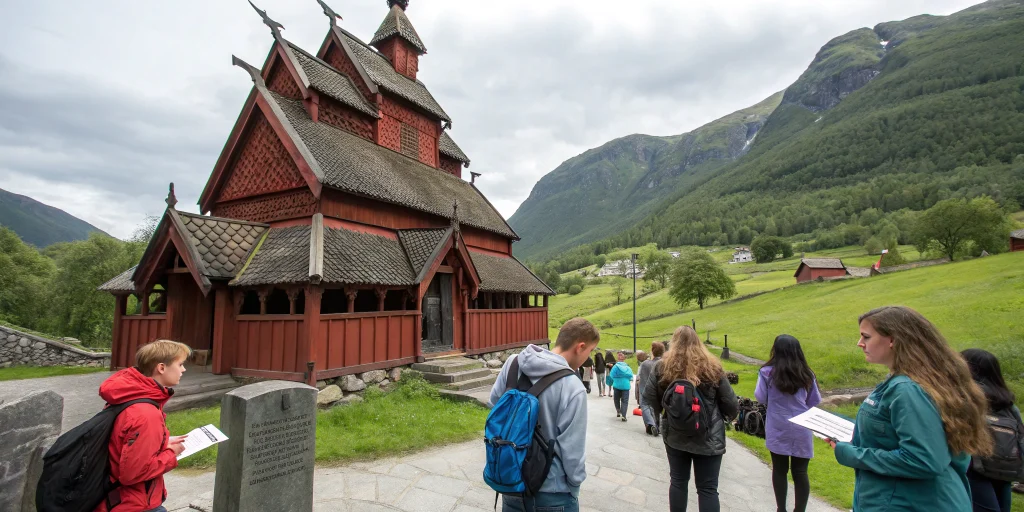
The Middle Ages witnessed Norway’s development of distinctive wooden stave churches, an architectural hallmark featuring intricate carvings of dragons, doves, and elk. These churches symbolize the country’s medieval spiritual life and craftsmanship.
For students interested in history, art, or architecture, Norway offers tangible connections to its medieval past through these preserved monuments, which are studied alongside broader European historical contexts.
Path to Independence: Nation Building and Social Progress
Norway’s journey to independence reflects resilience and political evolution. After centuries under Danish rule and a subsequent union with Sweden, Norway declared full independence in 1905 with the coronation of King Haakon VII. Soon after, Norway was also a pioneer in social reforms, granting women voting rights in national elections by 1913.
Understanding these milestones offers students insights into Norway’s progressive social values and democratic traditions that inform contemporary society.
Cultural Insights: Celebrations, Traditions, and Values for International Students
Immersing in Norwegian culture helps international students feel a part of the community and navigate social integration more smoothly.
National Celebrations: Constitution Day on May 17th
One of Norway’s most celebrated public holidays is Constitution Day, held every May 17th. Marking the signing of the Norwegian Constitution in 1814, the day is characterized by festive children’s parades, outdoor gatherings, and widespread donning of traditional costumes known as “bunad.”
Participating in or witnessing these celebrations offers students a unique cultural experience that emphasizes national pride, community spirit, and historical awareness.
Traditional Clothing: The Bunad Identity
The “bunad” is more than a festive garment; it symbolizes local identity and ancestral craftsmanship. Each region has distinct patterns and styles, sewing rich stories of family heritage into the intricate designs.
For students and educators alike, appreciating the bunad offers a window into Norway’s dedication to preserving regional customs amidst modernization.
Cultural Values: Equality, Respect, and Nature
Norwegian society is founded on principles of equality, inclusiveness, and respect—values that permeate educational environments and everyday life. Students will find a culture encouraging learning, civic engagement, and environmental consciousness.
International students often remark on the welcoming and egalitarian atmosphere in Norway’s universities and communities, contributing to a supportive environment for academic and personal growth.
Norway’s Natural Wonders and Lifestyle: The Environmental Context of Culture
Embracing Outdoor Activities Year-Round
“Friluftsliv,” or “open-air life,” is a fundamental Norwegian cultural concept reflecting the love for outdoor activities. From hiking and fishing in summer to skiing and snowboarding in winter, Norwegians engage actively with their natural surroundings.
International students can enrich their academic experience by exploring this lifestyle, often promoted by universities through clubs and organized outdoor events.
Witnessing the Aurora Borealis (Northern Lights)
The Northern Lights, or Aurora Borealis, provide an awe-inspiring natural spectacle visible in Norway’s northern regions during winter months. This phenomenon connects students to Norway’s Arctic environment and offers memorable moments beyond the classroom.
Geographic Diversity: Fjords, Mountains, and Arctic Tundra
Despite a relatively small population, Norway’s landscape varies dramatically from fertile valleys and dramatic fjords in the south to the arctic tundra in the north. This diversity shapes regional cultures, economies, and educational opportunities.
Students interested in environmental studies, geography, or natural sciences find Norway a living laboratory for their academic pursuits.
Promoting Cultural Understanding Through Academic Programs
For international students eager to deepen their knowledge of Norwegian history and culture, universities offer specialized courses. For example, the University of Bergen provides a course titled “Norwegian Culture and History,” covering topics from Viking heritage to contemporary society.
Incorporating cultural education into academic planning helps students integrate better and enhances their overall study experience in Norway.
Take the Next Step with Study in Norway
Exploring Norway’s rich history and culture provides international students with a unique lens through which to view their educational journey. From the legendary Vikings to modern democratic values, Norway offers a learning environment where culture and academia converge.
Interested in partnering with Study in Norway to enhance your international recruitment strategy while offering students unparalleled cultural and academic experiences?