
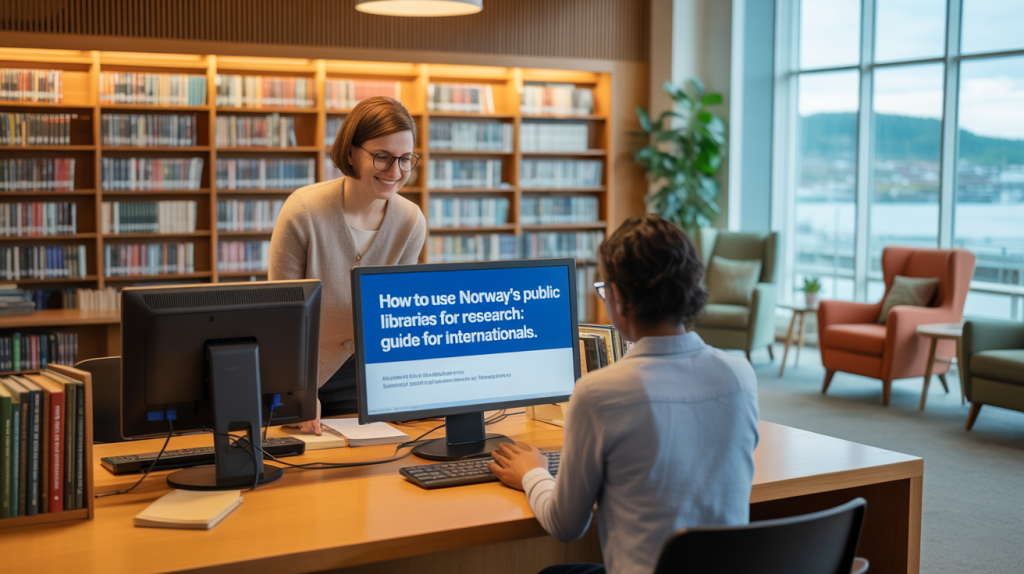
How to Use Norway’s Public Libraries for Research: A Comprehensive Guide for International Students and Education Professionals
- Accessing Physical and Digital Resources in Norway’s Public Libraries
- Using the National Library’s Digital Services Efficiently
- Research Support and Cooperative Infrastructure of Norwegian Libraries
- Key Points for International Students and Education Professionals
- How Study in Norway Supports Your Use of Norway’s Public Libraries for Research
- Conclusion: Empower Research Success with Norway’s Public Libraries
- Take the Next Step with Study in Norway
Accessing Physical and Digital Resources in Norway’s Public Libraries
Norway’s libraries are cornerstones of knowledge, democratizing access to information ranging from traditional printed texts to modern digital media. Understanding this landscape is essential for international students and their recruiters to leverage Norway’s educational offerings fully.
Wide Array of Resources Available
- Printed Books and Journals: Public libraries stock comprehensive collections of printed academic materials suitable for various disciplines.
- Digital Media and Online Archives: Many libraries offer e-books, subscription journals, audio-visual materials, and extensive archival content accessible onsite or remotely.
- Internet Access and Study Spaces: Free and reliable internet connectivity alongside dedicated study areas make libraries robust environments for focused research and academic collaboration.
The National Library of Norway serves as the central hub for these resources, offering an extensive catalog that includes books, newspapers, images, and scholarly journals. This specialization makes it a vital tool for in-depth research and documentation purposes.
For international students, it’s advisable to obtain a library card early on after arrival, unlocking immediate access to physical collections and many digital services.
Using the National Library’s Digital Services Efficiently
The National Library has pioneered online access to Norway’s literary and research heritage, enabling both resident and international researchers to utilize materials remotely within certain legal and technical restrictions.
How to Access the Online Library
To access most digital materials deposited through legal deposit mandates, users must:
- Log In Securely: Use FEIDE (Norwegian Education ID) or ID-porten credentials for authentication.
- Submit an Access Application: Fill in and submit a form requesting permission to access the digital library.
- Timed Access Windows: Upon approval, access is typically granted for 8 hours; inactivity exceeding 2 hours may require reapplication.
It’s important to note that for recent academic publications (particularly textbooks and professional literature published within the last 20 years), access may be restricted or limited for students not associated with a university faculty.
Concurrent Access Limitations and Usage Policies
- Only two users can simultaneously access the same digital book, so some patience may be necessary during peak demand times.
- Downloading or printing of digital materials is prohibited to comply with Norwegian copyright laws; all use must adhere strictly to these regulations.
By familiarizing oneself with these protocols, international students can navigate the National Library’s digital services efficiently and maximize their research capabilities.
Research Support and Cooperative Infrastructure of Norwegian Libraries
Norwegian libraries are not isolated institutions; they operate within an interconnected framework focused on open access, interoperability, and resource sharing. This cooperative infrastructure enhances research capabilities across the academic community.
Integration Between Public and Academic Libraries
- Shared Standards and Resources: Public libraries collaborate closely with university libraries and research centers. This integration facilitates seamless access to a wide array of materials, benefiting students at all levels.
- Open Access Initiatives: Supporting open access to research publications aligns with Norway’s commitment to accessible education and knowledge sharing.
- Research Guidance and Study Environments: Many libraries provide expert staff assistance, helping users effectively utilize available resources, from search strategies to digital tools.
This cooperative model makes Norway’s libraries particularly attractive to international education stakeholders seeking reliable, comprehensive research infrastructure for their students.
Key Points for International Students and Education Professionals
To assist your students or optimize your institution’s approach to international recruitment and admissions, keep these critical points in mind about using Norway’s public libraries for research:
- Library Card and Credentials: Ensure that students obtain library cards and set up the necessary digital credentials (FEIDE or ID-porten) promptly after arrival.
- Understand Digital Access Procedures: Emphasize the importance of procedure compliance for using the National Library’s digital collections, including application submission and timed access.
- Utilize Library Staff Expertise: Encourage students to seek help from library staff to navigate both physical and digital tools effectively.
- Plan for Access Restrictions: Inform students and recruiters about potential limitations on accessing recent professional literature to manage expectations.
- Leverage Study Spaces and Internet Connectivity: Recommend utilizing physical library spaces as conducive environments for research and collaboration.
Integrating these points within your student orientation materials or recruitment communications will position your institution or agency as knowledgeable and supportive, reinforcing your leadership in international education.
How Study in Norway Supports Your Use of Norway’s Public Libraries for Research
At Study in Norway, we recognize the importance of access to quality research resources in international education success. Our expertise extends beyond recruitment to helping education professionals and students navigate Norway’s academic landscape confidently.
- We provide comprehensive guidance on library access and digital infrastructure, connecting students with essential information.
- By facilitating partnerships between universities, recruitment agencies, and library services, we streamline access to academic resources.
- Our solutions reduce administrative complexity in admissions and credential validation, ensuring students meet access requirements smoothly.
Explore more about our services in international student recruitment and education solutions to learn how we can help your institution or agency succeed.
Conclusion: Empower Research Success with Norway’s Public Libraries
Norway’s public libraries are invaluable assets for international students and educational professionals. Understanding how to use Norway’s public libraries for research—from accessing physical collections to leveraging digital services of the National Library—empowers students to excel academically while enabling recruitment and admissions teams to provide expert support.
By embracing Norway’s collaborative library infrastructure and adhering to access protocols, international education stakeholders can ensure students gain the best resources for their studies.
Take the Next Step with Study in Norway
Discover how you can enhance your international recruitment and student support efforts with the expert guidance of Study in Norway. Together, we can empower students to maximize their educational experiences and research capabilities.