
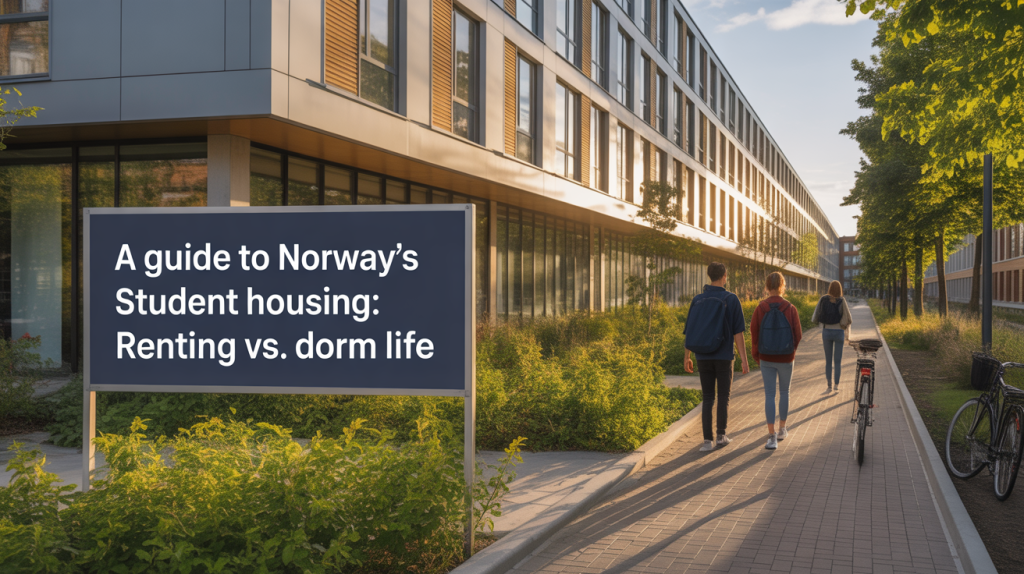
A Guide to Norway’s Student Housing: Renting vs. Dorm Life
Cost Comparison
Life in Norwegian Student Housing
Strategic Location Selection
Securing Student Housing
How Study in Norway Supports Students
Conclusion
Understanding Student Housing Options in Norway
International students looking to study in Norway will typically choose between two main types of housing:
- Student welfare housing (dormitories or residence halls)
- Private rental accommodations
Each option comes with distinct benefits and considerations in terms of cost, community, location, and lifestyle.
Student Welfare Housing: Community and Affordability
- Residence Halls/Dormitories: Single rooms (sometimes shared) with shared kitchens, bathrooms, and laundry facilities. Some may offer furnished rooms and internet access.
- Vibrant Social Environment: Dorm life fosters interaction between Norwegian and international students, creating an inclusive community atmosphere that supports cultural exchange and friendships.
- Additional Amenities: Some residence halls provide meal plans through communal canteens, recreational spaces, and events that enhance student well-being.
- Proximity to Campus: Student housing is often strategically located near university campuses, significantly reducing commute times and transportation costs.
Private Rental Market: Independence and Flexibility
- Shared Apartments and Private Rentals: Renting a room in a shared apartment or securing an individual flat is common, especially in urban centers like Oslo and Bergen.
- Location Variety: Private rentals allow students to choose neighborhoods based on personal preferences, lifestyle, and budget.
- Higher Costs and Competition: Renting privately can be more expensive, often requiring thorough research and early applications.
Cost Comparison: What to Expect Financially
Understanding the cost implications is essential when deciding between dormitories and private rentals.
- Regional Variations: Oslo remains the most expensive city for housing, with both private and welfare housing priced accordingly. In contrast, cities like Bergen or Trondheim may offer more affordable options.
- Dormitories Are More Budget-Friendly: Student welfare housing generally offers lower monthly rents, sometimes subsidized, making them ideal for students with tighter budgets.
- Living Outside City Centers: Choosing accommodation slightly further from city centers can help reduce rental costs without compromising access to university.
- Additional Expenses: When renting privately, students should consider other costs such as utilities, internet fees, and deposits.
Life in Norwegian Student Housing: Social vs. Independent Living
Advantages of Dormitory Life
- Immersive Cultural Integration: Living alongside Norwegian peers helps international students practice the language and learn local customs.
- Strong Support Systems: Close-knit communities facilitate networking, academic collaboration, and socializing.
- Convenience and Facilities: Many student residences include essential amenities, simplifying the transition to independent living.
Benefits of Private Rentals
- Independent Lifestyle: Freedom to personalize living space and manage schedules without the constraints of dorm life.
- Privacy and Space: Often providing more room and exclusive facilities such as private bathrooms and kitchens.
- Flexible Living Arrangements: Ability to live with friends or choose roommates selectively.
Strategic Location Selection for Students
Choosing the right location is crucial to balancing study, social life, and budget:
- Bergen and Other Regional Cities: Many students prefer the city center for its proximity to campus and vibrant social scene.
- Oslo’s Suburbs: The city’s well-connected public transport network allows students to live in suburban areas where rents are lower.
- Travel and Commute: Norway’s comprehensive transportation options make commuting manageable, broadening the range of viable accommodation choices.
Securing Student Housing: Tips for International Students and Admissions Teams
Successfully obtaining suitable housing requires early planning and coordination:
- Early Application: Student welfare dormitories are in high demand. International students should apply as soon as they receive admission offers.
- University Support: Admissions offices and international student coordinators often provide housing advisories and assist with applications.
- Documentation and Budget Planning: Prepare all necessary paperwork for housing applications and evaluate budgets to include living expenses.
How Study in Norway Supports Students and Institutions
As the leading platform for international education recruitment in Norway, Study in Norway is committed to facilitating smooth transitions for incoming students:
- Comprehensive Housing Information: Providing up-to-date, verified details on student housing options across Norwegian cities.
- Streamlined Application Processes: Enabling universities and recruitment agencies to guide applicants efficiently from admission to accommodation.
- Partnerships with Student Welfare Organizations: Connecting international students to reliable and affordable housing managed by official bodies.
- Customized Recruitment Insights: Assisting HR, marketing, and admissions teams with data-driven strategies to promote study programs alongside essential student services.
Conclusion: Choosing the Right Housing Path for a Successful Study Experience
Deciding between renting privately or living in dormitories in Norway hinges on personal preferences, budget, and desired lifestyle. Understanding these factors enables students and education professionals to make informed decisions that support successful international study experiences.
Take the Next Step with Study in Norway
Ready to provide your prospective students with the best housing information and support? Explore further: