
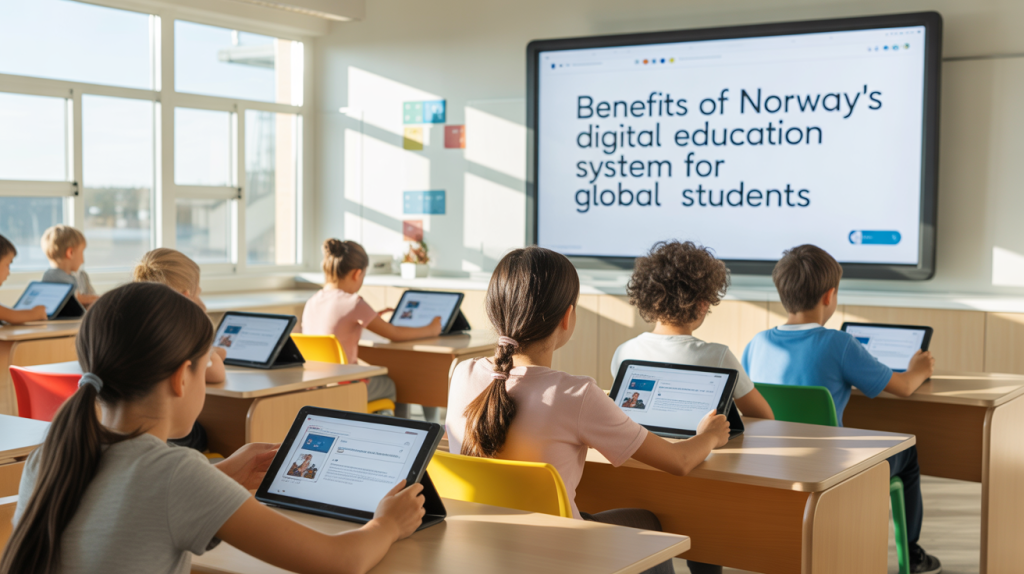
Exploring the Benefits of Norway’s Digital Education System
Flexible and Inclusive Learning Opportunities
One of the most significant benefits of Norway’s digital education system is its commitment to providing flexible and inclusive learning paths. Through a combination of on-campus, online, and hybrid learning models, Norwegian institutions offer adaptable study formats that cater to the diverse needs of students, including international learners balancing work, family, or other commitments.
- These flexible options remove geographical and temporal barriers, enabling students from anywhere in the world to access high-quality education without the constraints of physical location.
- This strategic digital transformation aligns with Norway’s national policy to democratize higher education and makes study programs accessible even to students who cannot travel or relocate.
For international student recruiters and university admissions teams, this flexibility represents a compelling selling point when attracting candidates seeking adaptable learning arrangements. Additionally, the inclusive design supports broader participation from students with varying access needs and life situations.
Future-Oriented and Career-Relevant Education
Norway’s digital education system is explicitly oriented toward producing graduates with skills that align with labor market demands and the digital economy’s evolving requirements.
- Institutions develop curricula in close cooperation with industry leaders, ensuring programs are hands-on and job-ready.
- Digital courses emphasize practical digital literacy, cybersecurity, data analytics, and emerging technologies, equipping students with current competencies that are highly valued by employers.
- Programmes such as those offered by Noroff exemplify this industry-integrated approach, combining rigorous academic content with tangible work-based learning experiences.
For HR and marketing professionals in education, highlighting Norway’s career-focused digital education offerings provides a strong argument for recruiting international students who aim to thrive in competitive global job markets.
Support for Lifelong Learning
The digital infrastructure in Norwegian higher education supports lifelong learning, a necessity in today’s fast-changing economic landscape.
- Digital tools and resources enable continuous upskilling and reskilling, allowing individuals to update their knowledge and skills throughout their careers without returning to traditional full-time study.
- This approach aligns with global trends towards micro-credentials and flexible certification models fueled by online learning platforms.
- Lifelong learning opportunities attract not only traditional students but also mid-career professionals and adult learners seeking career advancement or transition.
This flexibility reinforces Norway’s reputation as a forward-thinking education hub, appealing to international audiences interested in ongoing professional development.
Enhanced Internationalization and Collaboration
Norway’s digital education strategy actively promotes international cooperation and global learning communities.
- Virtual exchange programs, collaborative online courses, and hybrid international study formats enable students and faculty to engage across borders seamlessly.
- These models allow participation from students unable to commit to lengthy travel or relocation, expanding the reach of Norwegian education globally.
- Collaborative digital platforms foster cross-cultural academic collaborations and joint research, increasing the international appeal and visibility of Norwegian institutions.
For agencies working in student placement and edtech sectors, leveraging Norway’s extensive digital internationalization can create new partnerships, broaden student recruitment pipelines, and offer innovative program delivery mechanisms.
Data-Driven Quality Improvement
Norwegian higher education institutions employ digital learning analytics to enhance teaching quality and student engagement:
- By analyzing student interaction data, educators can identify learning challenges earlier and personalize support to improve outcomes.
- This evidence-based approach leads to continuous refinement of curriculum delivery, pedagogical strategies, and resource allocation.
- Improved student satisfaction and performance contribute to higher retention rates and successful graduate outcomes.
Institutions and recruiters can therefore confidently promote Norwegian digital education’s commitment to quality backed by real-time monitoring and iterative enhancement.
Strong Institutional and Industry Connections
The interplay between academia and industry is a defining feature of Norway’s digital education landscape:
- Close partnerships with businesses facilitate internships, networking opportunities, and direct recruitment pipelines for graduates.
- Digital platforms enable ongoing collaboration, co-development of course content, and joint innovation projects.
- This hybrid educational-industry ecosystem ensures that students gain relevant skills aligned with workplace realities and employer expectations.
For international recruitment teams, these connections signify distinct added value, enabling students to transition smoothly from education to employment within Norway or globally.
Accessible and Equitable Education
Norway’s existing digital infrastructure ensures broad access to digital learning tools, reducing socio-digital disparities and fostering equity:
- Widespread high-speed internet coverage and digital literacy facilitate nearly universal participation in online and hybrid education.
- Digital materials and media increase access to educational content, regardless of socio-economic or geographic background.
- The inclusive ecosystem levels the playing field for international and domestic students alike.
Such equitability supports the diversification goals of universities and aligns with global commitments to making education accessible to all.
Summary: Key Benefits of Norway’s Digital Education System
| Benefit | Description |
|---|---|
| Flexible Learning | Offers online, on-campus, and hybrid options that accommodate diverse student needs. |
| Career-Relevant Skills | Aligns programs with labor market demands, emphasizing practical and job-ready competencies. |
| Lifelong Learning Support | Facilitates continuous upskilling and reskilling through digital resources. |
| International Collaboration | Promotes virtual exchanges and cross-border academic partnerships. |
| Data-Driven Improvement | Utilizes learning analytics to enhance teaching quality and student outcomes. |
| Strong Industry Networks | Fosters partnerships with employers, improving internships and employment opportunities. |
| Equitable Access | Ensures inclusive participation through robust digital infrastructure. |
Take the Next Step with Study in Norway
Norway’s digital education system offers unparalleled opportunities for international students seeking quality, flexibility, and career-aligned learning. Education professionals and recruiters looking to capitalize on these advantages will find a trusted and experienced partner in Study in Norway.
If you are interested in exploring collaboration, enhancing your recruitment initiatives, or gaining deeper insights into Norway’s digital education landscape, contact Study in Norway today. Together, we can build pathways for students and institutions to succeed in the growing global digital education ecosystem.
Explore more about studying in Norway and discover how our expertise can help you connect with motivated international students embracing Norway’s digital future.